This guide outlines seasonal care: spring health checks, summer monitoring, autumn risk prioritization, and winter structure work. It specifies deep, infrequent watering, correct mulch depth and setback, and periodic soil testing with targeted amendments. Pruning focuses on dead, crossing, and weak attachments, with limits on annual removal and dormancy timing; hire certified arborists for high-risk tasks. Weekly inspections enable early pest control using sanitation and selective tools. Species selection aligns with site conditions and climate, setting up actionable next steps.
Key Takeaways
- Follow a seasonal care plan: inspect in spring/summer, prioritize risks in autumn, and do structure work in winter with post-storm checks.
- Water deeply and infrequently; maintain 5–8 cm mulch, off the trunk, and test soil every 2–3 years.
- Prune correctly: remove dead or weak branches, avoid topping, keep live-crown ratios, and limit annual removal to 10–20%.
- Monitor pests weekly during growth; prioritize sanitation and vigor, intervening only when thresholds are exceeded with targeted controls.
- Choose species suited to climate, soil, and site constraints; favor diverse, pest-resistant, certified nursery stock.
Seasonal Care Checklist: Spring Through Winter
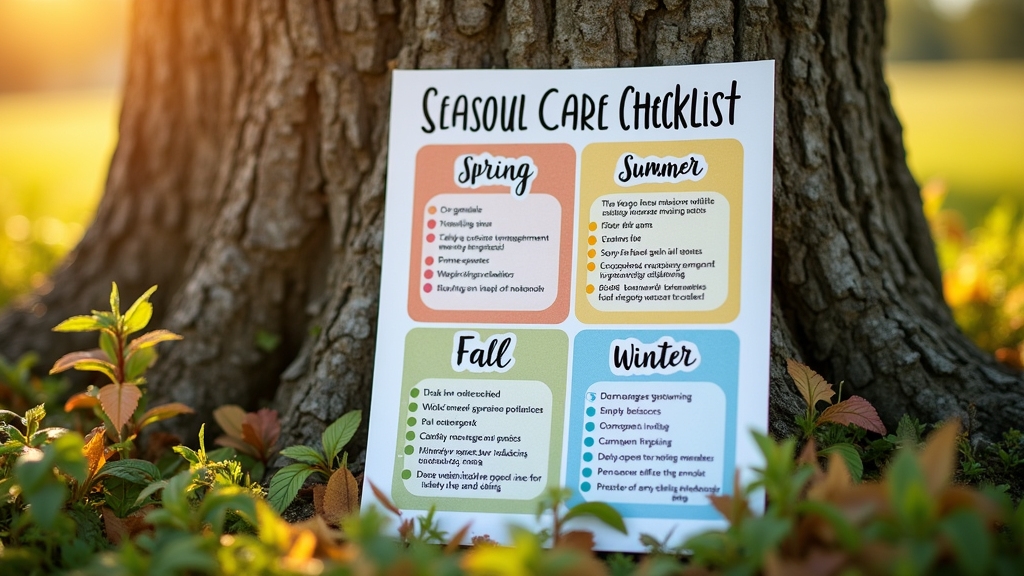
Spring marks the start of the active growing season and should trigger a systematic assessment of tree health and site conditions. Inspect buds, new shoots, and canopy density; note dieback, bark injuries, and structural defects. Verify root flare exposure and stability.
Schedule corrective pruning for dead, diseased, or crossing branches; disinfect tools between cuts. Calibrate pest and disease monitoring using degree-day models and past incidence records; deploy traps or visual scouting at defined intervals.
Summer requires continued surveillance for canopy thinning, leaf chlorosis, and heat or storm damage. Reassess staking and guying; remove or adjust to prevent girdling. Confirm adequate clearance from structures and utilities; coordinate with qualified professionals for high-risk work.
Autumn emphasizes structural resilience. Conduct post-season inspections, prioritize risk-prone limbs, and plan dormant-season structural pruning. Protect trunks from wildlife abrasion and equipment impacts with guards.
Winter is ideal for crown structure work in many species. Inspect after storms, document defects, and schedule remedial actions before spring.
Watering, Mulching, and Soil Health Essentials
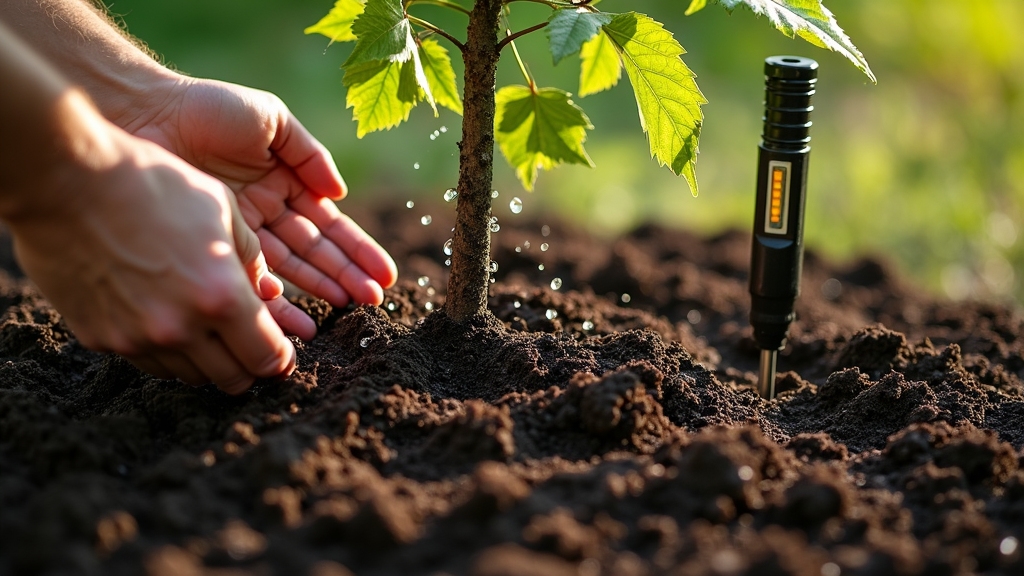
Routinely managed water, mulch, and soil conditions determine tree vigor, drought tolerance, and root stability. Mastery begins with matching inputs to species, soil texture, and phenology. Deep, infrequent irrigation that wets the entire root plate (typically 1–1.5 times the canopy radius) prevents shallow rooting and hypoxia.
Mulch functions as a moisture buffer and thermal moderator; wood chips 5–8 cm deep, kept 10–15 cm off the trunk, reduce evaporation and suppress weeds without depleting nitrogen. Soil health hinges on structure, organic matter, and balanced chemistry; compaction relief and targeted amendments outperform blanket fertilization.
- Quantify water: deliver 25–40 liters per 2.5 cm trunk diameter weekly in drought; verify with a soil probe to 20–30 cm.
- Time irrigation pre-dawn; avoid daily pulses; adjust for clay vs. sand infiltration rates.
- Maintain a mulch ring to the dripline; refresh annually, never exceed 8 cm.
- Test soil every 2–3 years; address pH, salinity, and deficient macronutrients with calibrated inputs.
Pruning Principles and When to Hire an Arborist
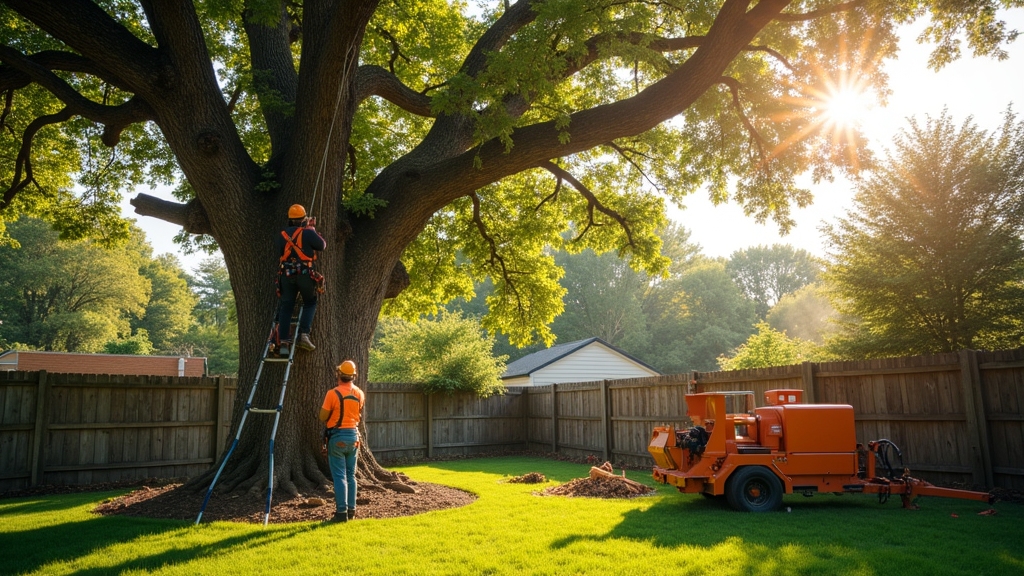
Although pruning is often perceived as cosmetic, it is primarily a structural and risk‑management practice that directs growth, improves clearance, and mitigates defects.
Pruning isn’t cosmetic—it’s structural care that guides growth, ensures clearance, and mitigates risks.
Sound practice follows ANSI A300 and ISA guidance: prioritize removal of dead, dying, crossing, or weakly attached branches; favor reduction over topping; and preserve branch collars by making three-step cuts just outside the collar to enable proper compartmentalization (CODIT).
Establish a dominant leader in young trees and maintain appropriate live-crown ratios (generally 60–70% on shade trees). Limit annual removal to roughly 10–20% of live crown to reduce stress.
Timing matters: prune most species during dormancy; conduct light corrective pruning after leaf‑out if structural issues require it.
Use clean, sharp tools; skip wound dressings. Avoid lion’s tailing and flush cuts.
Hire a certified arborist when canopy access requires climbing or aerial lift, when large limbs overhang targets, when structural defects or storm damage are present, or when protected/specimen trees demand a written pruning plan.
Identifying and Preventing Pests, Diseases, and Damage
Pruning that improves structure also reduces infection courts and pest harborage, but monitoring remains necessary to catch problems early. Effective surveillance relies on weekly visual inspections during active growth, emphasizing new shoots, leaf undersides, and branch junctions.
Indicators include stippling, frass, honeydew with sooty mold, cankers, oozing, dieback, and exit holes. Confirm identity before action; misdiagnosis wastes time and increases risk.
- Establish thresholds: tolerate minor cosmetic damage; intervene when defoliation exceeds 10–15% on young trees or when pests vector pathogens (e.g., bark beetles, psyllids).
- Prioritize exclusion and sanitation: remove deadwood and mummified fruit, sterilize tools (70% alcohol), and chip or dispose of infested material off-site to disrupt life cycles.
- Optimize vigor to enhance resistance: maintain mulch rings, irrigate to root-zone depth (15–30 cm), avoid excess nitrogen, and alleviate compaction to improve gas exchange.
- Deploy targeted controls: favor biological agents (Bacillus thuringiensis, parasitoids), selective insect growth regulators, and trunk injections where warranted; rotate modes of action and treat by phenology (degree-day models) to limit resistance.
Choosing the Right Tree Species for Your Yard and Climate
Before selecting a tree, site and climate constraints should be quantified to match species to conditions and minimize future failure. Selection begins with hardiness zone verification, chilling-hour requirements, heat tolerance, and projected 2050 climate normals.
Quantify site and climate limits first to match tree species and prevent future failures.
Evaluate soil texture, pH, drainage class, salinity, and compaction; align with species tolerances documented by regional extension tables. Map sun exposure, wind fetch, reflected heat, and utility conflicts. Size for maturity: height, spread, and root plate radius relative to available soil volume.
Prioritize genetic diversity and pest resistance by choosing regionally adapted, non-invasive species or vetted cultivars (e.g., Dutch elm disease–resistant Ulmus, disease-tolerant American sycamore selections). Favor species with strong branch architecture (U-shaped unions) and moderate growth rates for structural reliability.
In wildfire or coastal zones, select low-resin, high-moisture foliage or salt-tolerant taxa, respectively. Verify pollen burden if allergy sensitivity matters. Source nursery stock with local provenance where appropriate, and insist on certified, defect-free specimens for long-term performance.
Frequently Asked Questions
How Can Trees Increase Property Value and Curb Appeal?
Trees increase property value and curb appeal by providing structured canopy, seasonal interest, energy savings via shade/windbreaks, stormwater mitigation, and perceived neighborhood quality. Appraised gains range 3–15%. Select species with strong form, appropriate mature size, and maintain through pruning, mulching, and risk management.
What Permits or Regulations Affect Residential Tree Work?
Municipal codes, tree protection ordinances, heritage/landmark tree designations, coastal/stream buffers, HOA covenants, and utility easements govern residential tree work. Permits often require arborist reports, species/DBH thresholds, replacement ratios, neighbor notification, and nesting-season constraints; fines apply. Verify zoning maps and right-of-way ownership.
Are There Tax Incentives for Planting or Preserving Trees?
Yes. Tax incentives exist: federal energy-efficiency credits for qualified tree-related stormwater/energy projects, state urban forestry grants, municipal canopy rebates, and conservation easements yielding property or income tax benefits. Eligibility depends on documented species, planting standards, location, maintenance commitments, and verified ecosystem services.
How Do I Safely Plant Near Underground Utilities and Septic Systems?
They locate utilities via 811, map septic components, and maintain setbacks: 3–5 feet for shallow-rooted shrubs, 10–20 feet for small trees, 50+ feet for large species. Select non-invasive, shallow-rooted species, install root barriers, and avoid excavation within dripline.
What Insurance Should an Arborist Carry Before Working on My Property?
They should carry general liability (≥$1–2M), workers’ compensation, professional liability (errors and omissions), commercial auto, inland marine/equipment floater, and umbrella coverage. Verify ISO-based endorsements, additional insured status, primary/noncontributory wording, waiver of subrogation, and current certificates.
Final Thoughts
A concise, evidence-based tree care plan empowers homeowners to sustain healthy, resilient trees year-round. By following seasonal checklists, optimizing watering and mulching, and monitoring soil health, you can minimize stress and enhance long-term growth. Sound pruning—especially when performed by a professional tree trimming service—ensures structural stability, safety, and beauty. Routine pest and disease monitoring allows for early, effective interventions, while climate-appropriate, site-matched species reduce future maintenance and increase your property’s value and ecological impact.
If you want to ensure your trees thrive safely and beautifully in every season, trust the experts at Tinley Park Tree Service. Our certified arborists provide complete residential and commercial tree care—from tree removal and stump grinding to pruning and emergency tree services.Ready to protect and enhance your landscape?
Contact Tinley Park Tree Service today for a free consultation and discover how professional care can help your trees—and property—thrive all year long.