Routine, standards-based tree maintenance preserves structural integrity and curb appeal, directly elevating property value. ANSI A300 pruning establishes dominant leaders, proper crown ratios, and safe clearances, reducing failure potential and liability. Selective thinning improves light and airflow, enhancing canopy vigor and taper. Inspections by ISA Certified Arborists identify defects, pests, and diseases early, preventing costly losses. Correct mulching and visible root flare indicate resilient anchorage. Well-positioned shade and windbreaks lower energy loads. The following points outline how to achieve these outcomes.
Key Takeaways
- Well-maintained trees boost curb appeal, signaling disciplined asset care that translates into higher perceived property value.
- Strategic pruning improves structure and light, reducing risk while enhancing canopy health and overall landscape aesthetics.
- Regular inspections prevent failures and liabilities, mitigating costly damage from weak unions, pests, and diseases.
- Thoughtful placement and pruning lower energy costs by optimizing shade, windbreaks, and seasonal sun access.
- A documented maintenance plan extends tree lifespan, stabilizes budgets, and preserves long-term property value.
Curb Appeal That Sells
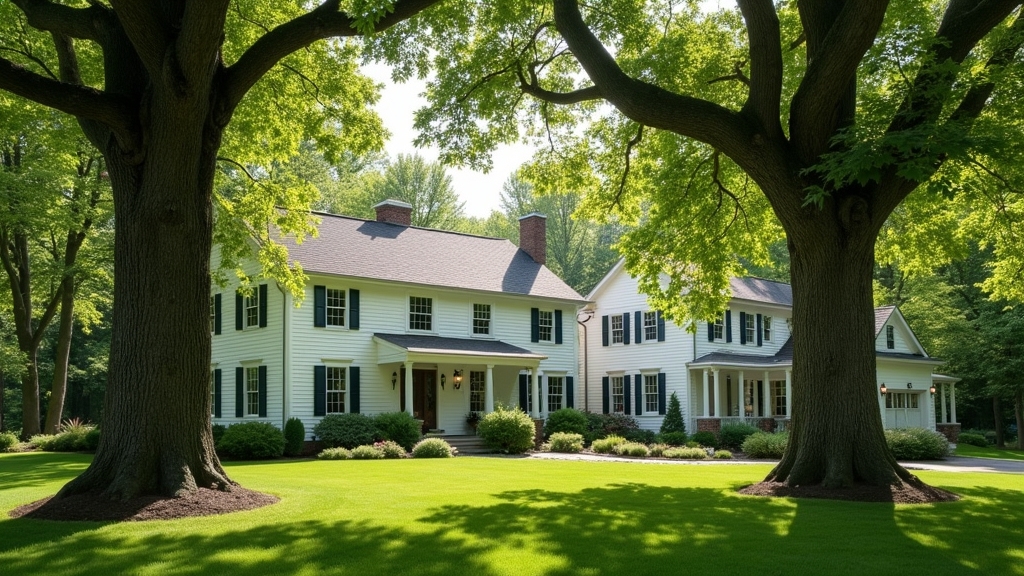
A well-maintained treescape measurably elevates curb appeal by signaling low risk and high asset stewardship. Prospective buyers infer disciplined management from trees with correct crown ratios, sound scaffold structure, and documented inspection histories.
Visual order aligns with risk mitigation: clearance to built structures, unobstructed sightlines at entries, and compliant root–pavement interfaces reduce perceived liability and future remediation costs.
Visual order signals risk readiness: clearances, sightlines, and compliant root–pavement interfaces cut future liabilities.
Health indicators are legible at a glance. Even canopy distribution, vigorous terminal buds, appropriate leaf area index, and absence of epicormic stress shoots communicate stability.
Ground-level cues—mulch depth within best-management thresholds, visible root flare, and intact buttress roots—suggest resilient anchorage and reduced likelihood of windthrow or root plate failure.
Defect suppression is equally market-relevant. Timely removal of deadwood, treatment of co-dominant stems with established unions, and mitigation plans for pathogens demonstrate due diligence.
A landscape presenting quantifiably managed tree risk converts aesthetic appeal into price confidence.
Strategic Pruning for Architecture and Light
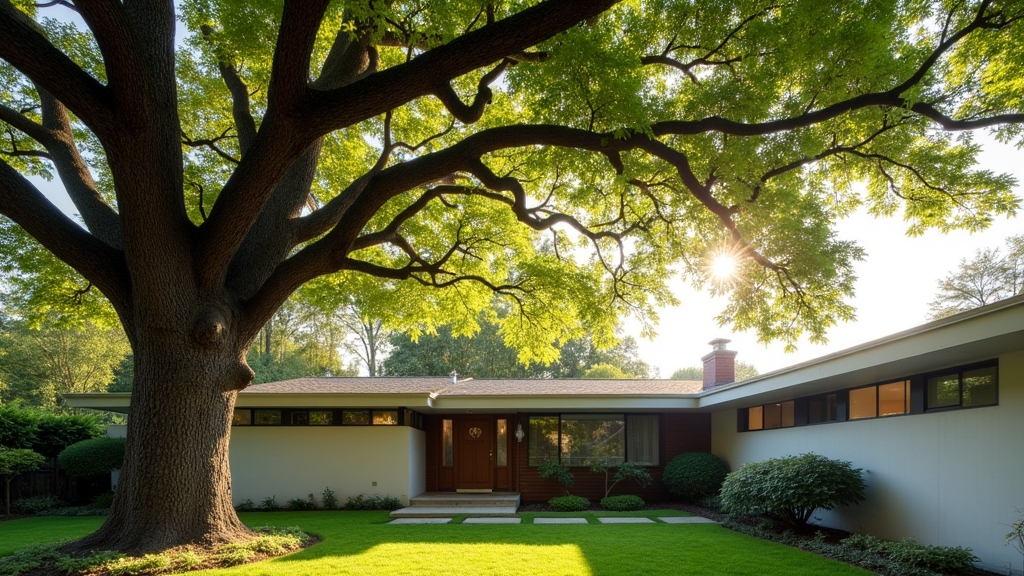
Though often framed as aesthetics, strategic pruning is primarily a structural and light-management intervention that reduces risk while optimizing property function. The objective is to engineer crown architecture that tolerates wind loading, sheds snow and ice predictably, and allocates photosynthate efficiently.
Practitioners apply ANSI A300 standards to establish or restore dominant leaders, subordinate competing codominants, and reduce lever arms on overextended laterals through reduction cuts placed just outside the branch protection zone.
Selective thinning—never lion-tailing—improves light penetration and air movement, decreasing leaf wetness duration while preserving taper and dynamic stability.
Crown raising is calibrated to clearance targets without creating excessive height-to-live-crown ratios. Structural pruning in juveniles prevents included bark unions and future retrenchment crises, while mature-tree reduction mitigates end-weight on defect-adjacent scaffolds.
Pruning cycles are timed to species phenology and vigor, avoiding excessive live-wood removal thresholds. The result is predictable canopy performance, optimized understory light for turf or solar gain, and sustained asset longevity.
Preventing Costly Damage and Liability
While trees are valuable assets, unmanaged defects and site conflicts translate directly into avoidable losses and liability exposure. Proactive risk management hinges on systematic inspections by ISA Certified Arborists, using Level 1–3 assessments to identify structural defects: co-dominant stems with included bark, over-extended levers, basal decay, root plate instability, and dead or cracked leaders.
Targets—structures, vehicles, utilities, and high-occupancy zones—are mapped to quantify risk and prioritize abatement.
Mitigations include crown reduction to lower sail area, subordinating or cabling weak unions to ANSI A300, end-weight reduction on lever arms, and timely removal of high-risk specimens.
Root-zone protection—mulch, decompaction, and exclusion from trenching—prevents destabilizing root severance and heave. Clearance pruning maintains defensible space from roofs, service drops, and signage, minimizing abrasion, gutter loading, and ignition vectors.
Documented work plans, permits, and post-storm inspections demonstrate due diligence. Insurers favor properties with formal tree risk management, reducing premiums and shielding capital from catastrophic losses.
Boosting Energy Efficiency and Comfort

Risk abatement does more than prevent losses; canopy configuration and species placement directly affect building envelope loads and occupant comfort. Properly positioned deciduous shade trees reduce solar heat gain through fenestration and roof assemblies, lowering HVAC runtime and peak demand. Winter sun access is preserved by selective crown thinning and avoiding over-densification on the south aspect. Evergreen windbreaks, sited perpendicular to prevailing winds, diminish infiltration and convective heat loss without inducing turbulence at eaves.
Targeted structural pruning optimizes leaf area index (LAI) for photosynthetically active radiation interception while maintaining airflow to prevent humidity stratification near façades. Root-zone mulching and irrigation scheduling sustain stomatal conductance during heat events, preserving transpiration cooling capacity. Species selection should consider mature height, crown architecture, and phenology to align shade and wind modulation with seasonal loads.
| Intervention | Performance Outcome |
| Deciduous canopy on west/southwest | Lower afternoon cooling load |
| Evergreen windbreak at 2–5H offset | Reduced winter heat loss |
| Crown thinning to 15–25% | Enhanced ventilation, controlled shade |
Enhancing Safety and Risk Management
Integrate tree risk assessment into site management to reduce hazard exposure and liability. Competent arborists apply standardized protocols (e.g., ISA TRAQ) to evaluate likelihood of failure and target occupancy, generating defensible risk ratings.
Priority actions often include crown cleaning to remove deadwood, structural pruning to correct co-dominant stems, and reduction pruning to recalibrate sail area in wind-exposed canopies. Root collar excavation clarifies buttress root condition and detects decay or girdling roots. Where defects exceed tolerances, cabling, bracing, or staged removals mitigate residual risk.
Clearance pruning preserves sightlines, utility separations, and code compliance, while maintaining branch collar integrity to expedite compartmentalization. Load-path analysis and windthrow considerations inform species- and site-specific interventions.
Documented inspection intervals aligned with peak stress periods—post-storm, freeze-thaw, and drought cycles—strengthen duty-of-care defenses. By quantifying risk, targeting defects, and maintaining auditable records, owners minimize casualty events, stabilize insurance costs, and protect property value through predictable, proactive risk governance.
Protecting Against Pests and Disease
Proactive monitoring—scouting for frass, exit holes, cankers, and chlorosis—enables early detection that limits pathogen spread and preserves high‑value specimens.
Targeted pruning that removes infested or crossing branches reduces vector habitat, improves airflow and light penetration, and lowers inoculum pressure.
A vigorous, well-structured canopy, supported by proper soil nutrition and irrigation, exhibits greater resilience to pest pressure and disease incidence, reducing failure risk and long-term remediation costs.
Early Detection Saves Trees
Although trees often mask decline until failure is imminent, early detection of biotic threats—particularly insect pests and pathogenic fungi or bacteria—is the most cost-effective risk mitigation strategy in arboriculture.
Proactive surveillance reduces mortality, structural loss, and collateral damage to built assets by enabling targeted, low-impact interventions before pathogen loads or pest populations surpass action thresholds.
1) Implement scheduled inspections using ANSI A300 and ISA BMPs: assess crown vigor, shoot dieback, chlorosis, and abnormal phenology; document baseline condition for trend analysis.
2) Utilize diagnostic tools: increment borers, resistographs, hand lenses, and soil/foliar assays; confirm causal agents via lab culturing or PCR where warranted.
3) Monitor sentinel indicators: frass, galleries, pitch tubes, cankers, mycelial fans, epicormic sprouts, and root collar disorders.
4) Establish thresholds and response protocols: quarantine vectors, adjust irrigation and fertility, deploy selective biopesticides or trunk injections, and verify efficacy with follow-up monitoring.
Pruning Reduces Infestation
Prune to disrupt pest and pathogen lifecycles, improve canopy aeration, and remove infection courts before they propagate.
Strategic crown cleaning eliminates deadwood, cankers, and borer-prone stubs that harbor vectors and inoculum. Correct reduction cuts decrease shading and humidity pockets, lowering foliar wetness duration that favors fungal sporulation. Targeted thinning increases light and airflow, degrading microhabitats exploited by aphids, scale, and mites.
Cut placement matters: execute at the branch protection zone with proper collar preservation to facilitate compartmentalization (CODIT), limiting pathogen ingress.
Time interventions outside peak flight or oviposition windows for bark beetles and clearwing borers. Sterilize tools between trees to prevent iatrogenic spread. Dispose of infested debris promptly.
Integrate monitoring for frass, exit holes, and sooty mold, adjusting pruning frequency to site pressure and species susceptibility.
Healthier Canopy Resilience
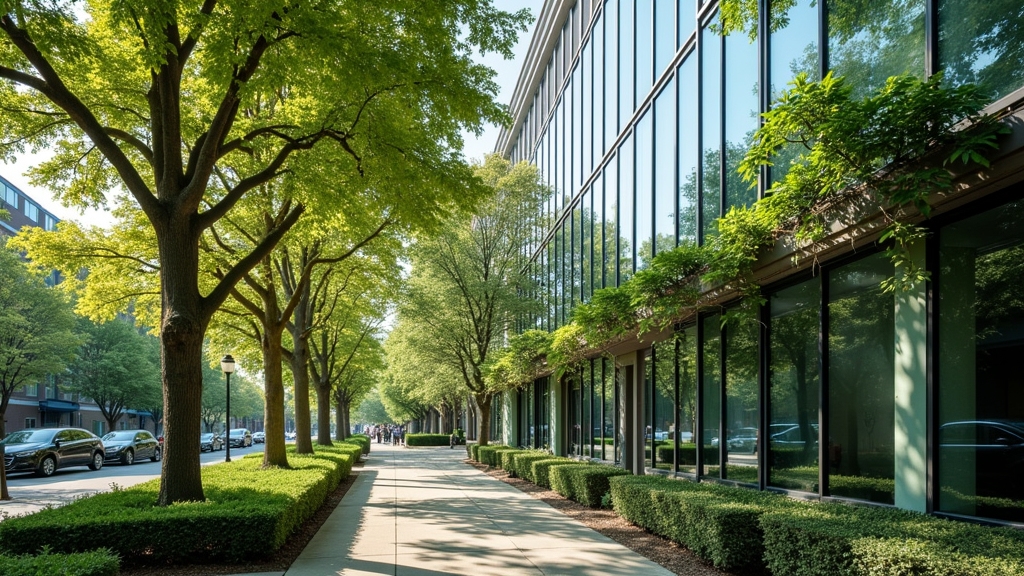
Resilience begins with canopy architecture that minimizes biological risk and optimizes tree defense. A structurally balanced crown distributes wind load, reduces stem oscillation, and limits opportunistic entry points for pathogens and borers. Vigilant maintenance sustains high leaf area index without creating dense, shaded microclimates that favor foliar fungi. Integrated tactics protect asset value by preventing decline cascades.
1) Specify pruning to preserve strong branch attachment (U-shaped unions, appropriate aspect ratios), eliminating codominance that predisposes to bark inclusions and canker colonization.
2) Maintain vertical and radial spacing for airflow, accelerating cut-surface desiccation and suppressing spore germination and vector residency.
3) Optimize water and nutrient regimes to support phenolic synthesis, compartmentalization (CODIT), and fine-root turnover.
4) Implement monitoring protocols—degree-day tracking, pheromone traps, and targeted sanitation—triggering timely interventions and minimizing inoculum pressure.
Long-Term Tree Health and Lifespan
Extend a tree’s functional lifespan by managing the factors that most reliably drive decline: structural defects, biotic agents, and site stressors. Longevity hinges on reducing failure probability and preserving vigor. Priority actions include early-structure pruning to establish dominant leaders, selective reduction to mitigate lever-arm forces, crown thinning to lower sail, and removal of included bark or competing codominance via subordinations. Proactive plant health care targets pathogen pressure, optimizes nutrient availability, and maintains soil moisture within field capacity, avoiding hypoxia. Mulch depth, root collar clarity, and uncompacted soil volumes sustain fine-root turnover and carbohydrate reserves.
| Risk Driver | Diagnostic Indicators | Targeted Intervention |
| Codominant stems | Included bark, tension cracks | Subordination, reduction cuts |
| Root defects | Girdling roots, heave, poor taper | Root collar excavation, radial mulching |
| Decay fungi | Conks, hollow resonance | Load reduction, retention vs. removal thresholds |
| Water stress | Leaf scorch, low shoot elongation | Irrigation auditing, mulch, soil amendment |
| Nutrient imbalance | Chlorosis, sparse canopy | Soil testing, calibrated fertilization |
These measures extend service life, stabilize risk profiles, and protect property value.
Choosing Professionals and a Maintenance Plan
Selecting qualified providers begins with vetting ISA Certified Arborists who carry appropriate licensing, insurance, and demonstrated competence in ANSI A300 standards and safe work practices.
A structured maintenance plan should include seasonal inspections to identify defects, pest pressure, nutrient deficiencies, and clearance conflicts before they escalate into hazard conditions.
Clear scopes of work, documentation, and risk mitigation priorities support predictable budgets and protect property value.
Vet Certified Arborists
Due diligence starts with verifying credentials: property owners should engage ISA Certified Arborists or equivalent credentialed professionals with demonstrated experience in risk assessment, pruning to ANSI A300 standards, and safe work practices compliant with ANSI Z133.
Vetting guarantees competence in diagnostic rigor, hazard mitigation, and defensible documentation that protects property value and liability posture.
- Confirm licensure, insurance (general liability and workers’ compensation), and written scope aligned to ANSI A300 work specifications and Z133 safety controls.
- Evaluate diagnostic capability: TRAQ credential, resistograph or sonic tomography access, soil analysis proficiency, and correct species-specific pruning prescriptions.
- Review portfolio and references demonstrating mitigation of structural defects, target management, and successful preservation during construction impacts.
- Require a maintenance plan with quantified objectives, inspection intervals, risk ratings, prioritized actions, and budget forecasting, linking tasks to measurable outcomes and warranty terms.
Schedule Seasonal Inspections
While tree risk fluctuates with phenology and weather, structured seasonal inspections anchor a defensible maintenance program. A cadence of spring, summer, fall, and post-storm assessments enables early detection of defects and trend analysis.
Practitioners should apply ISA TRAQ protocols: level-one walk-throughs for portfolio triage and level-two inspections with sounding, binoculars, and root collar exposure where indicators warrant. Inspectors document targets, occupancy rates, likelihood of failure, and consequences to produce quantifiable risk ratings.
Selection of professionals prioritizes credentials, calibration, and impartiality; specify scope, deliverables, and revisit intervals in a written plan.
Seasonal focus shifts:
- spring—budbreak vigor, canker expansion;
- summer—foliar pathology, borer activity;
- fall—branch unions under fruit/seed load;
- winter—structural defects with leaf-off visibility.
Integrate findings into pruning cycles, cabling decisions, and removal contingencies.
Frequently Asked Questions
How Do Trees Influence Property Tax Assessments or Insurance Premiums?
Trees influence assessments and premiums via quantified risk exposure: species, DBH, structural defects, proximity to structures, and canopy overhang. Inspectable hazards elevate insurance costs; documented risk mitigation, compliant pruning, and removal of targets can reduce premiums, stabilize assessed value.
Which Tree Species Historically Correlate With Faster Home Resale Times?
Quercus rubra, Acer rubrum, Lagerstroemia indica, Magnolia grandiflora, and Betula nigra correlate with faster resale, given mature canopy, species diversity, and low perceived hazard. Buyers favor structurally sound, non-invasive, low-maintenance taxa with minimal root–infrastructure conflict and predictable phenology.
What Permits or Local Regulations Affect Tree Work on Private Property?
Permits commonly govern removal, pruning of protected/heritage trees, diameter-at-breast-height thresholds, nesting-season restrictions, utility clearance, and roadway sightlines. Jurisdictions often require ISA-certified arborist reports, mitigation planting, and hazard assessments; violations trigger fines. Coastal, wetlands, and wildfire WUI overlays impose additional constraints and compliance inspections.
How Does Tree Placement Impact Future Renovation or Expansion Plans?
Tree placement governs buildable area, setback compliance, and root-zone conflicts. Misaligned specimens impede foundations, utilities, and access, trigger critical root zone encroachments, elevate heave and windthrow risk, complicate crane logistics, and necessitate costly protection, pruning, or removal during additions, driveways, trenching, and grade changes.
Can Trees Affect Underground Utilities or Septic System Performance?
Yes. Tree roots can infiltrate utility conduits, crack sewer laterals, and compromise septic drainfields via biomat accumulation. Species with aggressive root architectures exploit leakage gradients, exacerbating hydraulic loading, causing pipe displacement, effluent surfacing, and soil structure failure; enforce root barriers, setbacks, and monitoring.
Final Thoughts
Disciplined, standards-based tree maintenance directly protects curb appeal and property value. Following ANSI A300 pruning to build dominant leaders, keep healthy live-crown ratios, and maintain safe clearances reduces failure risk and liability. Pairing structural pruning with routine inspections by ISA-Certified Arborists catches defects, pests, and diseases early—before they turn into expensive losses. Proper mulching with a visible root flare strengthens anchorage, while smart placement and pruning of shade/windbreak trees lowers energy loads. A documented plan ties it all together, extending lifespan and stabilizing budgets.
Ready to safeguard your property value with expert care?
Work with the professionals at Tinley Park Tree Service. We follow ANSI/ISA best practices for pruning, tree trimming, and removals, and our emergency team is available when storms strike.
Next steps:
- Get a free assessment — Contact us to schedule an on-site review and tailored maintenance plan.
- Explore services — See how we protect your landscape year-round: Full Services.
- Learn more — Why hire a pro? Start here: Benefits of Professional Tree Service.