A healthy tree shows a balanced crown, vigorous seasonal shoot growth, species-typical, turgid foliage, continuous bark and taper, strong U-shaped branch unions, and a visible root flare with uniform soil moisture. Warning signs include chlorosis, patchy defoliation, epicormic shoots, asymmetric dieback, cankers, pitch tubes or D-shaped exit holes, conks or shelf fungi, and hidden flares from deep planting. Out-of-season flowering or sectorial symptoms suggest stress or pathogens. Timely monitoring, proper pruning windows, and diagnostic tools refine decisions, with more actionable cues ahead.
Key Takeaways
- Healthy trees have balanced crowns, turgid foliage with species-typical color, and a well-defined leader with strong U-shaped branch unions.
- Uniform, season-appropriate growth and budbreak indicate vigor; out-of-season flowering or patchy dieback signals stress or disease.
- Leaves showing chlorosis, stippling, distortion, or canopy transparency over 30–40% suggest nutrient issues, pests, or declining photosynthesis.
- Trunks should have continuous, intact bark and symmetrical wound closure; cankers, excessive sloughing, or progressive distal dieback indicate decline.
- Visible root flare, uniform soil moisture, and absence of conks are positive; fungal conks, honey-colored rhizomorphs, or Armillaria signs warn of decay.
What a Healthy Tree Looks Like
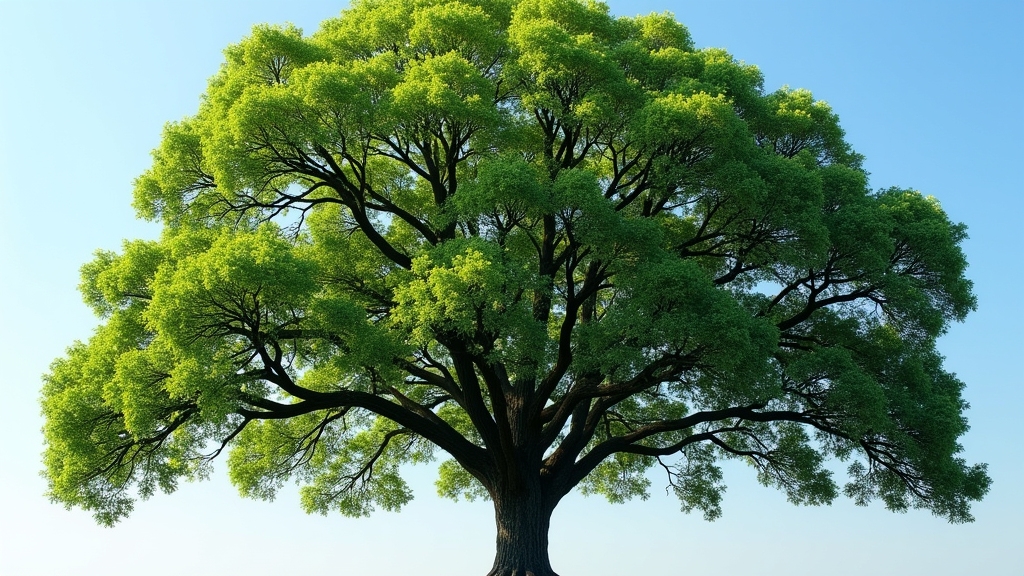
Although species-specific traits vary, a healthy tree typically presents balanced crown architecture, vigorous seasonal shoot growth, and uniformly turgid foliage with species-appropriate color and size.
Structural assessment reveals a dominant, well-defined leader (in species where expected), evenly distributed scaffold branches with appropriate attachment angles, and absence of codominance or included bark.
Trunk shows continuous, intact bark and a smooth taper without cankers or mechanical defects. Annual shoot extension aligns with site potential; twigs display firm buds and properly lignified wood.
Root-zone indicators include a stable buttress flare, uncompacted critical root area, and no adventitious suckering attributable to stress.
Leaves are free of chlorosis, necrosis, distortion, or stippling; leaf area index corresponds to age and vigor, with minimal premature abscission.
Reproductive output is proportional, not excessively mast-driven by stress.
Sapwood is bright and moist upon inspection; pruning wounds exhibit sound callus formation and woundwood development, with no fungal conks or exudates.
Seasonal Changes vs. Warning Signs
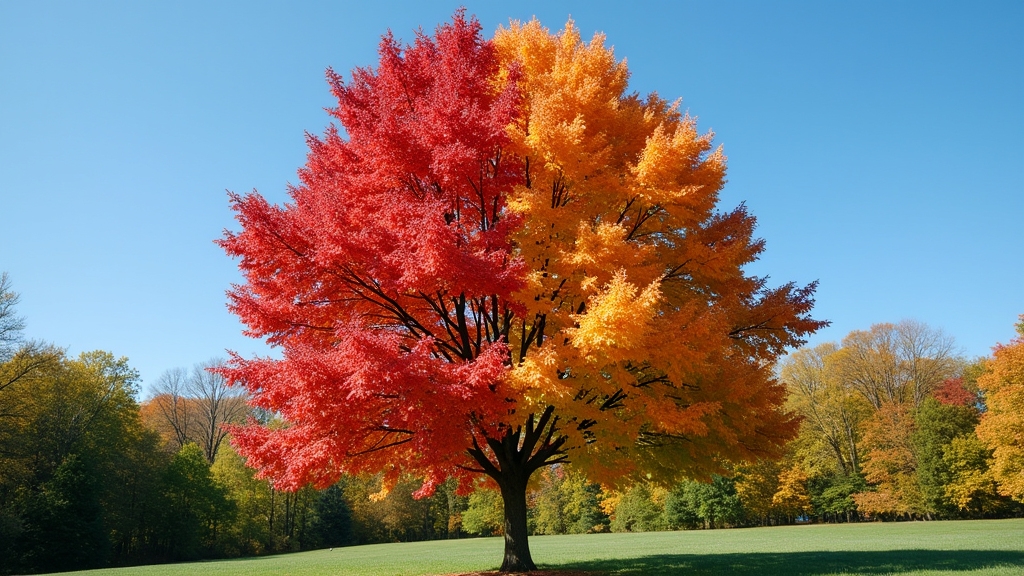
While many phenological shifts are normal, distinguishing seasonal patterns from pathology relies on timing, distribution, and tissue-specific cues. Predictable dormancy, bud set, and synchronized senescence follow species-specific calendars and microclimate. Deviations outside expected windows—such as out‑of‑season flowering, premature budbreak after brief thaws, or sustained delayed leaf-out—suggest stress, pathogen activity, or root-zone disruption.
Spatial uniformity matters. Seasonal responses occur broadly and symmetrically across the crown and scaffold branches, whereas pathology often produces localized sectors, unilateral presentation, or progressive spread from an inoculation or injury point.
Spatial uniformity matters: seasonal changes are symmetric; pathology shows localized sectors or progressive, unilateral spread.
Tissue specificity is diagnostic: transient, superficial changes that resolve with weather normalization differ from persistent cambial necrosis, phloem discoloration, or canker margins.
Evaluate antecedent weather, soil moisture balance, and thermal accumulation (growing degree days) against species norms. Correlate anomalies with recent disturbance (grading, de-icing salts, herbicide drift).
Confirm with increment borer or knife tests for live cambium, assess bud viability by cut tests, and document chronology to separate cyclical phenology from disease trajectories.
Leaf and Canopy Clues
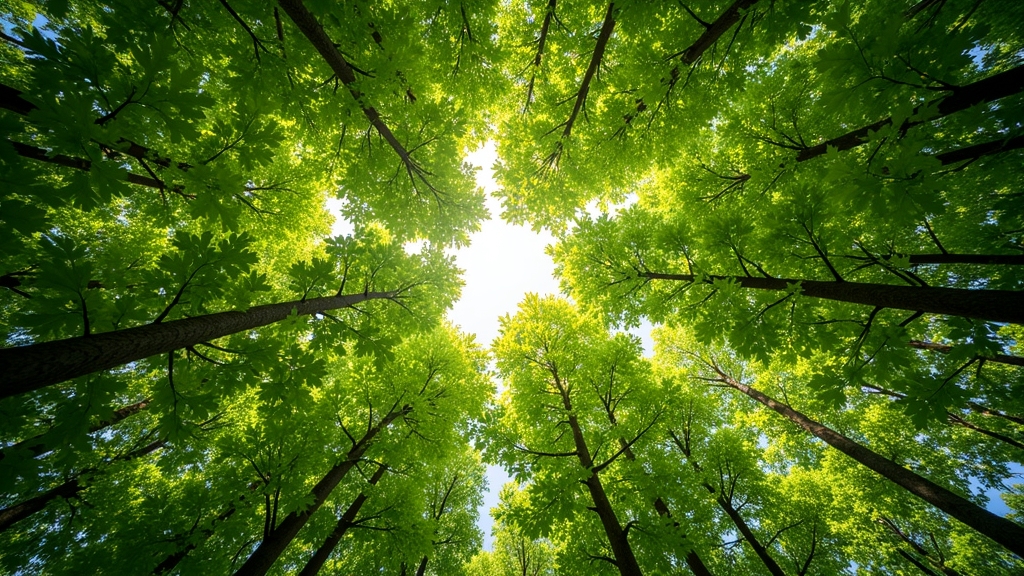
Foliage condition and crown architecture provide high-value diagnostics for tree vigor. In healthy individuals, leaves exhibit species-typical size, turgor, and chroma, with uniform distribution across the canopy. Leaf Area Index (LAI) and crown density should align with regional norms; deviations signal resource limitation or pathology.
Chlorosis indicates nutrient imbalance or impaired uptake; interveinal patterns suggest iron or manganese deficiency, while marginal scorch implies drought or salinity stress.
Patchy defoliation, epicormic foliar clusters, or tufted leaves at branch ends indicate canopy retrenchment. Premature senescence, especially asymmetrical across aspects, often denotes root-zone disturbance or localized vascular impairment.
Distorted laminae, shot-holes, or stippling warrant differential diagnosis for insects or foliar pathogens; presence of honeydew and sooty mold supports sap-feeder activity.
Evaluate bud set and current-year shoot extension; reduced increment reflects chronic stress. Canopy transparency above 30–40% (species-adjusted) correlates with declining photosynthetic capacity.
Consistent, well-formed flushes and balanced crown ratios denote resilience and adequate carbohydrate reserves.
Trunk, Bark, and Branch Health
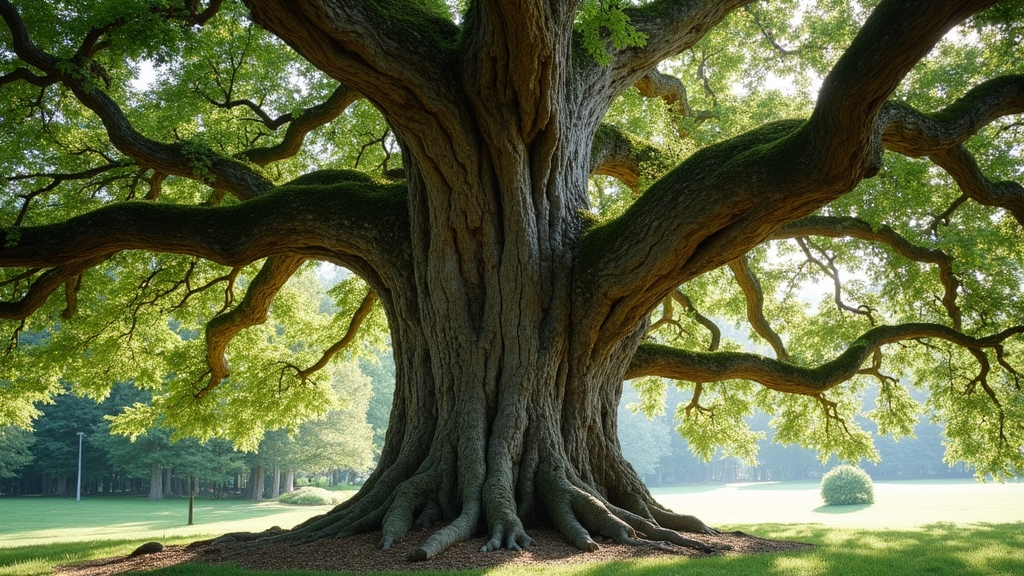
Beyond canopy indicators, the structural axis offers high diagnostic value. A healthy trunk exhibits continuous taper, sound wood, and uniform bark adherence. Bark should display species-appropriate texture with minimal sloughing; excessive exfoliation, longitudinal cracks, or cankers indicate compartmentalization failure or active pathogens.
Evaluate annual woundwood ribs for symmetrical closure; stalled callus or sunken margins suggest decay. Tapping can reveal hollows; a dull, resonant note warrants further assessment with resistance drilling or sonic tomography.
Branch architecture should reflect strong attachment: U-shaped unions with visible branch collars and limited included bark. Epicormic sprouting along stems often signals chronic stress or over-thinning.
Pruning wounds must be outside the branch bark ridge and collar; flush cuts or stubs correlate with decay columns. Inspect for resin or sap exudation, frass, galleries, and exit holes to detect borers. Measure dieback proportion and distribution—progressive distal dieback, especially on codominant leaders, indicates systemic decline or structural instability.
Root and Soil Indicators
Evaluating root-zone conditions begins with soil moisture balance: uniform, friable moisture supports gas exchange, while chronic saturation or drought correlates with root hypoxia or desiccation and increased disease susceptibility.
Proper root flare visibility—widening at the trunk base at or just above grade—indicates correct planting depth; buried flares suggest girdling roots and impaired stability.
Presence of fungal growth, such as Armillaria mushrooms or conks, serves as a diagnostic red flag for root or butt rot, warranting further inspection with probing, resistography, or laboratory assays.
Soil Moisture Balance
While canopy symptoms often draw attention, soil moisture balance is a primary determinant of tree health and should be evaluated at the root–soil interface.
Diagnostic assessment begins with texture-informed field capacity estimates and gravimetric or volumetric readings to quantify plant-available water. In healthy conditions, soil exhibits friable structure, moderate matric tension, and oxygen diffusion rates that sustain fine root respiration.
Chronic deficit presents as hydrophobic aggregates, elevated diurnal stem water potential, and brittle, desiccated fine roots. Chronic excess yields reduced redox potential, anaerobic odor, iron/manganese mottling, and sloughed cortical tissues indicative of hypoxia.
Practitioners should cross-validate moisture sensor data with tensiometer curves, infiltration tests, and evapotranspiration demand.
Mulch depth, irrigation frequency, and drainage pathways are adjusted to maintain water potentials within species-specific tolerance windows.
Root Flare Visibility
Root flare exposure is a primary field indicator of root–crown health and planting depth accuracy. A visible, symmetric flare at grade signifies correct planting depth, adequate oxygen diffusion, and stable buttress roots. Buried flares correlate with girdling roots, hypoxic rhizosphere, and chronic decline. Inspectors should clear minimal soil to locate the flare, distinguish it from stem taper, and note grade relative to surrounding soil or mulch. Measurement emphasis: flare diameter, eccentricity, soil line, and root collar disorder.
| Indicator | Diagnostic Interpretation |
| Flare visible at soil surface | Proper depth; normal buttressing; lower risk of girdling |
| Flare buried ≥5 cm | Elevated risk of stem decay, collar disorders, decline |
| Asymmetric flare | Potential girdling or confined rooting; investigate utilities/curbs |
| Mulch piled on flare | Moisture retention against bark; remove to grade |
| Adventitious roots at stem | Chronic burial or saturation; reassess depth and aeration |
Fungal Growth Presence
Mycelial and sporocarp expression at the soil–root interface offers high-specificity clues to belowground pathology and substrate conditions. Ectomycorrhizal fruiting near the dripline, with white, fanlike mycelium and resinous boletes or russulas, often indicates functional symbiosis and adequate carbon allocation.
In contrast, perennial conks (Ganoderma, Phellinus), sulfur shelves (Laetiporus), or Kretzschmaria “burnt crusts” at the butt signal active wood decay and compromised structural integrity. Black zone lines, cinnamon-brown setal crusts, or copious honey-colored rhizomorphs (Armillaria) at the collar denote pathogenic aggression.
Moisture and aeration modulate signal strength: prolific saprobes on chronically saturated soils suggest hypoxia and root mortality.
Diagnostic workflow should pair fruiting-body identification with resistography, sonic tomography, and targeted root crown excavation. Absence of sporocarps does not exclude decay; inspect for white rot sheets, cambial staining, and resin exudation.
Common Pests and Diseases to Watch For
How can early recognition of biotic stressors prevent irreversible canopy decline and structural failure?
Diagnostic vigilance targets signature signs of key pests and pathogens. Bark beetles (e.g., Ips, Dendroctonus) leave pitch tubes, frass-packed galleries, rapid crown fade.
Emerald ash borer produces D-shaped exit holes, S-shaped larval galleries, basal epicormic sprouts.
Asian longhorned beetle creates round exit holes, oviposition pits, excessive frass.
Hemlock woolly adelgid forms white wool at needle bases with needle yellowing and thinning.
Sap-feeders like scale insects yield honeydew, sooty mold, and twig dieback.
Leaf miners and defoliators show serpentine mines, windowpaning, and synchronous defoliation waves.
Phloem-feeding aphids and psyllids cause cupping and chlorosis.
Fungal and oomycete diseases present distinct syndromes:
Dutch elm disease shows flagging, brown vascular streaking;
oak wilt causes rapid bronzing and sectorial vascular discoloration;
anthracnose manifests angular necrosis along veins;
Phytophthora root rot produces collar cankers, resin exudation, and wilt under adequate soil moisture.
Accurate identification hinges on symptom pattern, host specificity, seasonal timing, and tool-assisted inspection.
When to Monitor, Prune, or Call a Professional
A structured seasonal monitoring schedule enables early detection of stress indicators, such as canopy thinning, leaf chlorosis, and bark lesions, aligned with local phenology.
Pruning should follow species-specific timing—typically late winter for most deciduous trees and post-flush periods for many evergreens—to minimize pathogen entry and optimize wound compartmentalization.
A certified arborist should be engaged when structural defects, canopy dieback exceeding 20%, root disturbance, storm damage, utility conflicts, or regulated pests are present, or when diagnostic uncertainty persists.
Seasonal Monitoring Schedule
Four checkpoints across the year provide a practical framework for tree health surveillance: late winter, early spring, mid-summer, and early fall.
Late winter allows unobstructed inspection of structure, bark integrity, cankers, frost cracks, and dormant buds; it is ideal for baseline risk assessment and planning.
Early spring focuses on budbreak uniformity, shoot dieback, soil moisture status, and emergence of early-season pests; deviations indicate latent stress or root dysfunction.
Mid-summer evaluations target leaf density, chlorosis patterns, marginal scorch, wilting, and secondary pests; concurrent assessment of irrigation adequacy and heat stress is critical.
Early fall emphasizes premature leaf drop, abnormal coloration, fruiting body presence, and root flare visibility.
Professional consultation is recommended whenever structural defects, rapid decline, or regulated pests are detected.
Pruning Timing Guidelines
While timing varies by species and objective, pruning is generally most effective during late winter dormancy, when pathogens and insect vectors are less active and branch architecture is fully visible.
Dormant cuts minimize carbohydrate loss, optimize wound occlusion, and reduce disease transmission risk. Late winter also facilitates precise structural corrections before spring growth initiates.
Monitor monthly for defects: deadwood, rubbing branches, narrow codominant unions, included bark, cracked limbs, and storm-damaged hangers.
Prune immediately if branches are dead, broken, or pose target risk, regardless of season. For species intolerant of late pruning (e.g., maple, birch), execute structural cuts in late winter but delay sap-bleeding reductions until full leaf-out.
Avoid pruning oaks during high-vector periods; limit to mid-winter or post-leaf hardening. Defer summer thinning during drought stress. Clean tools between trees.
When to Hire Arborist
When should an arborist be engaged versus routine monitoring or homeowner pruning? Decision-making hinges on risk, diagnostic uncertainty, and regulatory constraints. Homeowners can monitor minor leaf chlorosis, twig dieback under 10%, or correct small crossing branches with sanitized tools. Arborists should be consulted for structural defects, rapid decline, pests requiring lab confirmation, or work near utilities. ANSI A300 and ISA BMPs support formal assessment when defects intersect targets, or when decay exceeds thresholds on load-bearing wood.
| Condition | Action | Rationale |
| Minor aesthetic imbalance | Monitor | Low risk; observe trend |
| Deadwood >2” diameter aloft | Hire arborist | Potential failure energy |
| Fruiting bodies at root flare | Hire arborist | Likely structural decay |
| Storm-damaged codominants | Hire arborist | Requires cabling or reduction |
Obtain written prescriptions, scope, and insurance verification.
Frequently Asked Questions
How Much Does a Professional Tree Health Assessment Typically Cost?
Typically $100–$400 per tree, varying by region, arborist credentials (ISA Board-Certified Master Arborist premium), site complexity, report depth, lab diagnostics (soil/foliar assays), and travel. Detailed inventories or tomography add $300–$1,500+. Many firms credit fees toward prescribed treatments.
Are There Tree Health Smartphone Apps That Actually Work?
Yes. Several apps reliably assist diagnostics when paired with field verification. iNaturalist and PlantNet identify species; ArborScope, TreeCheck, and Leaf Doctor track pests, canopy vigor, and stress indices. Users should calibrate inputs, validate with extension resources, and integrate ground-truth measurements.
Can Installing Landscape Lighting Harm Tree Health Long-Term?
Yes—improper landscape lighting can harm trees long-term. Chronic photoperiod disruption, heat at bark, soil compaction from installation, root severance, and repeated trunk penetration elevate stress, pest susceptibility, and decay risk. Mitigations: low-heat LEDs, shielded fixtures, root-sensitive trenching, timers, arborist-guided placement.
What Insurance Covers Damage From a Failing Tree?
Homeowners insurance typically covers sudden tree-fall damage to structures; inclusive auto covers vehicle impacts. Exclusions apply for neglect, preexisting rot, or earth movement. Liability coverage may respond if negligence is proven. Documentation, arborist reports, and prompt claims notification optimize outcomes.
How Do HOA or City Ordinances Affect Tree Care Decisions?
HOA bylaws and city ordinances dictate species selection, pruning intervals, clearance heights, removal permits, and mitigation requirements, shaping risk management and maintenance budgets. Compliance relies on covenants, municipal codes, ISA standards, documented arborist assessments, notice procedures, and penalties for unauthorized work or neglect.
Final Thoughts
A systematic approach to assessing tree health helps homeowners distinguish normal seasonal changes from warning signs of decline. By observing canopy density, leaf color, bark integrity, and root-zone conditions, you can identify stress before it leads to irreversible damage. When signs such as dieback, chlorosis, cankers, or fungal growth appear, timely diagnostics and corrective pruning are key to restoring vigor and stability.
However, when symptoms progress rapidly or structural risks emerge, professional intervention becomes essential. Certified arborists—like the experts at Tinley Park Tree Service—can perform advanced evaluations, targeted pruning, and safe removals that protect both your property and your trees’ long-term health. Whether you need tree trimming, disease management, or emergency services, their experienced team follows ANSI and ISA standards to ensure lasting results.
Keep your trees healthy, safe, and beautiful all year long.
Contact Tinley Park Tree Service today to schedule your professional tree health assessment and protect your landscape with expert care.