A tree’s life cycle begins as a dormant seed activated by moisture, temperature, and oxygen. It germinates, forms a seedling, and shifts from stored reserves to photosynthesis. As a sapling, it balances root and shoot growth, reaching for light. Maturity brings a broad canopy, strong defenses, and reproductive effort via flowers, cones, and seeds. Trees adapt to drought and fire, resist pests, and partner with fungi. Aging reduces vigor, and deadwood supports ecosystems. There is more to this resilient journey.
Key Takeaways
- Seeds break dormancy when moisture and temperature cues trigger germination, starting root emergence and initial growth from stored reserves.
- Seedlings rapidly develop roots and leaves, shifting from stored energy to photosynthesis while vulnerable to drought and disturbance.
- Saplings strengthen stems and expand canopies, balancing root and shoot growth via hormones and growing toward light.
- Mature trees thicken trunks and bark, form broad canopies, and partner with fungi to enhance nutrient uptake and resilience.
- Reproduction allocates energy to flowers, cones, and seeds; dispersal and defenses ensure survival, leading to aging, decline, and ecological renewal.
From Seed to Sprout: The Journey Begins
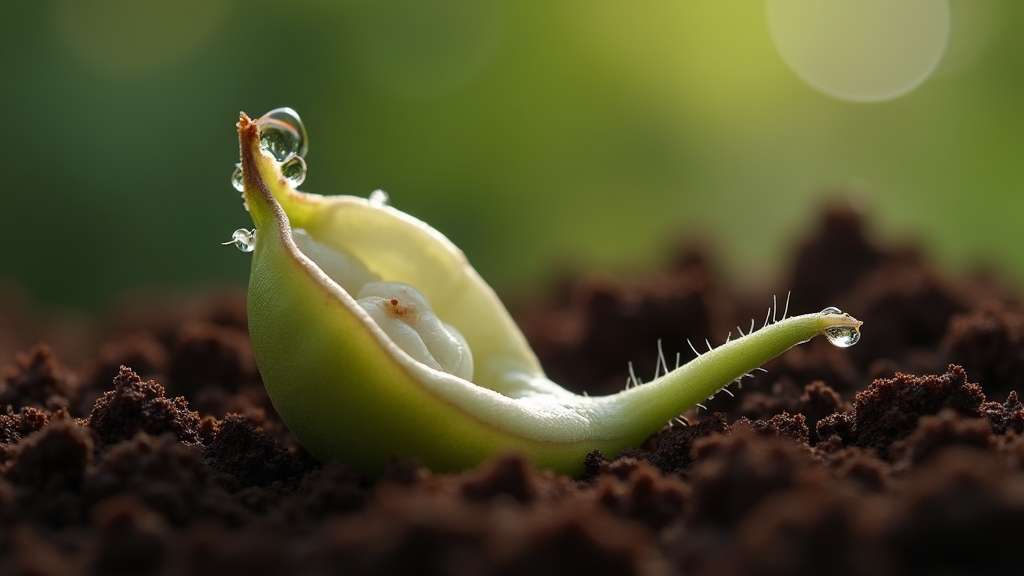
Although dormant at first, a seed holds the embryo and stored food needed to begin growth when conditions align.
Seed germination begins when moisture penetrates the coat, activating enzymes that mobilize reserves. Temperature, oxygen, and light act as key environmental factors, each influencing timing and success. Adequate water swells tissues and restores metabolism; suitable warmth accelerates biochemical reactions; oxygen supports respiration; light can either promote or inhibit germination depending on species.
Moisture awakens seeds; temperature, oxygen, and light together orchestrate timing and success of germination.
Protective dormancy mechanisms, such as hard coats or chemical inhibitors, often require cues like cold periods, scarification, or leaching to break.
These signals guarantee germination occurs in a favorable window rather than at random. Variation among species reflects adaptation to local climates and soils, aligning emergence with conditions that maximize early survival without premature expenditure of resources.
Seedling Stage: Establishing Roots and Leaves
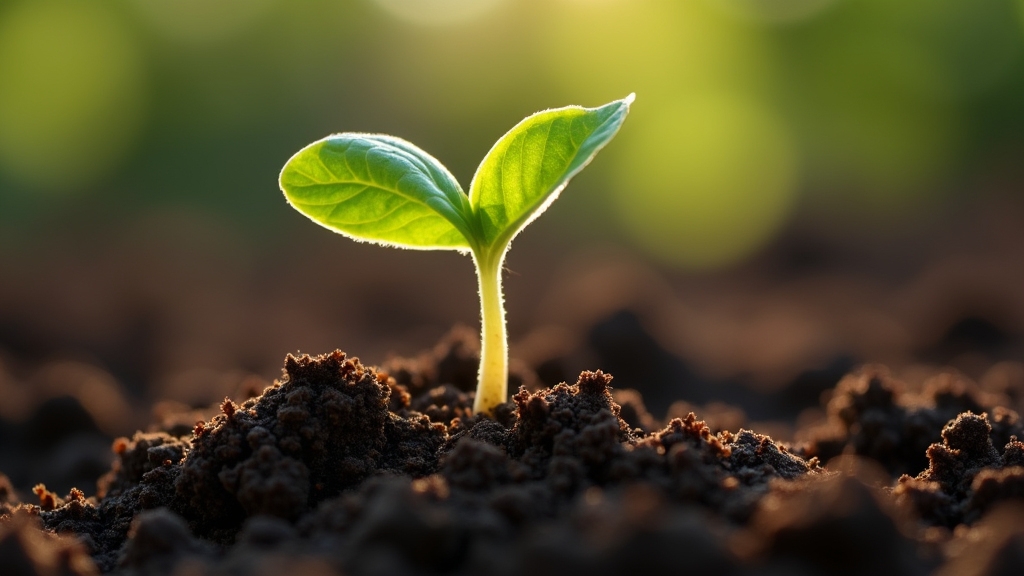
Pushing through the soil surface, the seedling shifts from reliance on stored reserves to active photosynthesis. It stabilizes in place through rapid root development, anchoring in the upper soil while fine root hairs expand the absorption zone. Moisture and minerals feed metabolism; sunlight drives sugar production as cotyledons give way to true leaves. Leaf formation increases surface area, improving gas exchange and energy capture. Vulnerability to drought and disturbance remains high, so efficient resource use is essential.
| Feature | Function | Observation |
| Primary root | Anchorage | Extends downward first |
| Root hairs | Absorption | Increases water uptake |
| Cotyledons | Initial energy | Shrink as reserves deplete |
| True leaves | Photosynthesis | Broaden with veins |
| Stem tissues | Support | Thicken slightly |
Balanced growth keeps tissues hydrated, powered, and poised for future structure.
Sapling Growth: Reaching for Light
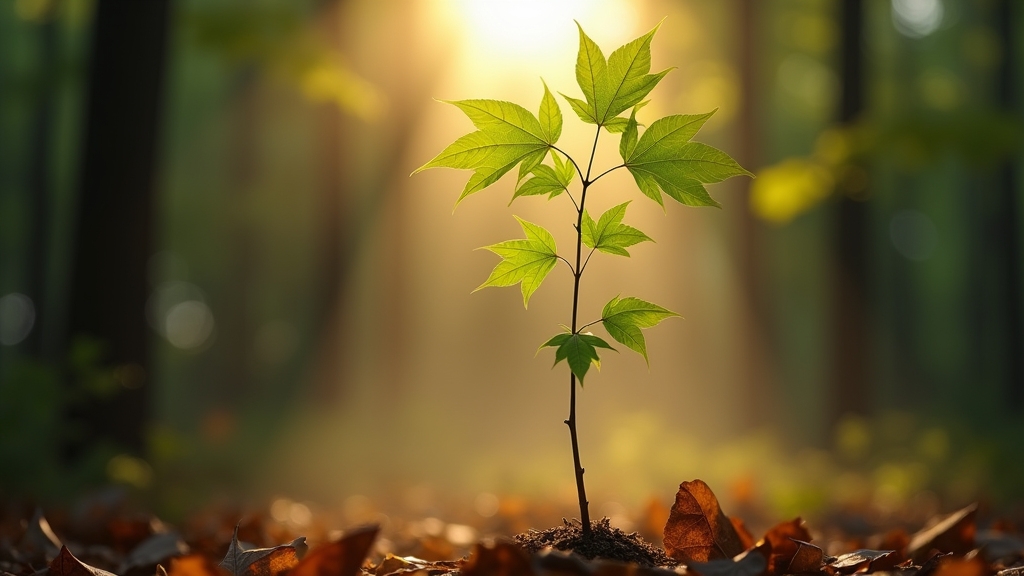
Building on seedling establishment, the young tree enters the sapling phase with sturdier stems and expanding leaf area.
Guided by phototropism, its shoots orient toward light while internodes elongate to rise above competing vegetation.
Growth remains balanced as roots broaden to secure water and nutrients, supporting the upward push of the shoot.
Seedling Establishment
Emerging from the soil, the young sapling begins a race for light, allocating energy to height and leaf expansion while anchoring with a modest root system.
In this establishment phase, seedling nutrition depends on both stored reserves and early uptake from surrounding soil composition. Environmental factors shape survival: temperature swings, wind, and herbivory test fragile tissues.
Suitable growth conditions include balanced moisture availability, adequate light requirements, and gentle, aerated substrates that prevent root suffocation. Genetic variability influences tolerance to shade, drought, and pathogens, leading to uneven outcomes within the same stand.
Competition dynamics with herbs and neighboring seedlings limit resources, making spacing decisive. When resources align, steady root extension supports water uptake, while expanding leaves increase carbon gain and stabilize early vigor.
Phototropism and Growth
As seedling reserves wane and roots gain footing, the young tree shifts focus to directional growth, aligning stems and leaves toward ideal light. Phototropism governs this turn.
Cells detect light direction through pigments that sense blue wavelengths, triggering shifts in growth hormones along the stem. Auxin, a key signal, accumulates on the shaded side, loosening cell walls there so those cells elongate more than sunlit neighbors. The stem bends, placing leaves where light capture improves.
Internodes lengthen or shorten according to light quality and intensity, optimizing spacing to reduce self-shading.
Leaves reorient by adjusting petiole curvature, keeping blades perpendicular to incoming rays. When shade deepens, the response strengthens; under uniform illumination, it quiets.
Over time, repeated adjustments produce a canopy architecture tuned to local light.
Root and Shoot Balance
Competing demands define the sapling stage: shoots chase light while roots secure water and minerals to fuel that chase. A young tree allocates resources to maintain a workable ratio: root development supports water uptake and anchorage; shoot growth expands leaves to harvest energy. If light is scarce, more biomass flows to stems and leaves; when soil dries, the balance shifts downward to roots. Hormones—auxins from shoots, cytokinins from roots—mediate this dialogue, adjusting cell division and elongation.
| Factor | Response |
| Ample light | Faster shoot growth |
| Low light | Taller, thinner shoots |
| Moist, rich soil | Broader root development |
| Dry, poor soil | Deeper, finer roots |
This balance stabilizes the sapling, preventing top-heavy stress and enabling steady, resilient expansion.
Maturity: Building Canopies and Communities
A mature tree shifts energy from rapid height gain to sustaining a broad canopy and stable structure. In this stage, trunk and major limbs thicken, bark defenses strengthen, and roots broaden to anchor mass and supply water.
Through canopy formation, leaves arrange to capture light efficiently while limiting self-shading, and branches prune themselves through shade and wind.
Stable canopies regulate temperature below, slow rain to protect soil, and feed the ground with litter that builds humus.
Fungal networks expand along roots, improving nutrient exchange and drought tolerance.
Wildlife nests, perches, and foraging routes multiply as cavities and layered foliage appear.
The community impact extends outward: cooler microclimates, quieter streets, moderated stormwater, and improved air quality, all linked to the tree’s sustained maturity.
Reproduction: Flowers, Cones, and Seed Dispersal
Though growth slows in maturity, reproduction accelerates as trees allocate energy to flowers, cones, and seeds that carry genes beyond the parent’s canopy.
Flowers attract pollinators with nectar, scent, and color, while wind-pollinated blossoms release abundant, lightweight pollen. Conifers form cones; male cones shed pollen grains that drift to receptive female cones, where ovules await fertilization. These pollination strategies reduce waste and increase the odds of successful seed formation.
Once fertilized, embryos develop within protective tissues. Seed adaptations align with dispersal agents: wings for wind, fleshy fruit for animals, hooks for fur, and buoyant coats for water.
Timing is critical; many species release seeds during favorable seasons. By spreading offspring across space, trees avoid crowding and enhance genetic mixing.
Survival Strategies: Drought, Fire, and Competition
As seeds disperse and new cohorts establish, persistence depends on withstanding stress. Trees employ targeted survival mechanisms that match local climates and disturbance regimes.
Drought resilience arises from deep roots, tight stomatal control, and wood that resists embolism. Fire adaptation may involve thick insulating bark, self-pruning lower branches, or serotinous cones that release seed after heat.
Competition strategies balance light capture against resource conservation, shaping crown architecture and growth timing.
- Water scarcity: Deep rooting and flexible leaf physiology support drought resilience without exhausting reserves.
- Heat and flames: Fire adaptation includes thick bark, epicormic buds, and rapid post-burn sprouting.
- Space and light: Competition strategies use vertical growth, shade tolerance, or gap opportunism.
- Nutrient economy: Efficient allocation and slow-turnover tissues extend survival during shortages.
Defenses and Allies: Pests, Diseases, and Symbiosis
A tree navigates threats with layered defenses, from bark and thorns to resins, tannins, and timed toxin bursts.
It faces a shifting roster of pests and pathogens—borers, aphids, fungi, and blights—that test these barriers.
It also recruits allies, particularly mycorrhizal fungi and protective insects, which enhance nutrient uptake and bolster resistance.
Physical and Chemical Defenses
Brace against attackers, a tree deploys an arsenal of physical and chemical defenses that deter herbivores and suppress pathogens. Its physical barriers begin with bark thickness and leaf toughness, which slow chewing and entry.
When breached, resin production floods wounds, trapping invaders and sealing tissue. Inside cells, defensive compounds—secondary metabolites—act as herbivore deterrents and provide fungal resistance by disrupting digestion or fungal cell walls.
Through chemical signaling, injured tissues alert neighboring cells and even nearby plants, priming broader protection. These adaptive strategies are costly but conserved across species.
- Physical barriers: bark thickness, leaf toughness, and wound periderm.
- Resin production: sticky plugs that immobilize intruders and exclude air.
- Defensive compounds: secondary metabolites tailored to threats.
- Chemical signaling: rapid alerts that coordinate systemic defenses.
Common Pests and Pathogens
Though armed with defenses, a tree remains a host to a predictable suite of pests and pathogens that exploit seasonal windows and structural vulnerabilities.
Effective pest identification begins with observing leaf distortion, frass, cankers, and dieback that signal insect threats or fungal infections. Bark borers, sap-feeders, and defoliators weaken tissues, while rusts, wilts, and rots disrupt water transport and storage.
Disease management integrates sanitation, pruning, and timely monitoring to preserve tree health and limit spread. Preventive measures include avoiding wounds, improving airflow, and selecting resistant varieties aligned to site conditions.
When action is needed, targeted treatments and biological control—predators, parasitoids, or antagonistic microbes—reduce collateral damage. Evaluated regularly, these practices minimize ecological impact while sustaining growth and resilience across changing climate and urban pressures.
Symbiotic Partners and Benefits
While threats abound, trees also cultivate alliances that enhance survival and performance. Observers note how mutualistic relationships underpin resilience: roots join fungal partnerships that widen access to water and minerals, returning sugars in a precise nutrient exchange.
These living networks also facilitate tree communication, signaling stress and allocating resources that buffer individuals and uphold ecosystem stability. Benefits extend outward, promoting biodiversity support, habitat creation, and long-term carbon sequestration.
- Mycorrhizal webs enable efficient nutrient exchange, improving drought tolerance and growth while stabilizing soils.
- Nitrogen-fixing microbes enrich surrounding substrates, reducing fertilizer needs and boosting community vigor.
- Protective insects and birds mitigate herbivory and disperse seeds, reinforcing biodiversity support and habitat creation.
- Symbiotic networks share warning cues, guiding defensive chemistry and sustaining productivity that enhances carbon sequestration and landscape stability.
Senescence and Decline: The Aging Tree
As a tree enters senescence, physiological processes slow and maintenance outpaces growth. The aging process becomes evident as carbohydrate reserves thin, nutrient depletion increases, and repair lags behind injury.
Tree longevity varies by species and genetic factors, so decline indicators must be interpreted within context. Careful health assessment notes reduced canopy density, shortened shoots, smaller leaves, and irregular annual rings.
Environmental stressors such as drought, heat, soil compaction, and pollution amplify structural weaknesses, opening pathways for decay and increasing disease susceptibility. Root health often wanes, limiting water uptake and resilience.
Management aims to reduce stress, improve soil conditions, and lighten mechanical loads through selective pruning. Within restoration ecology, practitioners prioritize stabilizing habitats and retaining veteran trees where safety and ecosystem goals align.
Legacy of Decay: Deadwood, Soil, and New Life
In time, the decline of a tree becomes a catalyst for renewal, with deadwood transforming from structure to habitat and resource. As wood softens, fungi, insects, and microbes drive decay processes that release trapped elements. This nutrient cycling fuels soil enrichment, preparing sites for seedlings.
Cavities and logs enable habitat creation for birds, amphibians, and pollinators. Across forest ecosystems, these deadwood benefits extend beyond a single trunk, shaping understory light, moisture, and temperature. The result is measurable ecological importance and lasting biodiversity support.
- Deadwood scaffolds habitat creation, offering shelter, nesting sites, and moist refuges.
- Decomposers convert lignin and cellulose, accelerating nutrient cycling and soil enrichment.
- Logs stabilize microclimates, boosting biodiversity support across forest ecosystems.
- Rotting wood stores carbon, moderating flows and reinforcing ecological importance.
Frequently Asked Questions
How Do Trees Sense Seasons and Time Without a Brain?
They sense seasons and time through photoreceptors, temperature perception, and hormone signaling, not a brain. Their biological clocks track day length, integrating seasonal cues like light quality and chilling hours, guiding dormancy, bud break, flowering, and growth with precise timing.
What Role Do Tree Hormones Play in Daily Activities?
Tree hormones orchestrate daily activities by coordinating growth, movement, and protection. Auxins drive hormonal growth and phototropism, cytokinins regulate cell division, gibberellins extend stems, abscisic acid manages stomatal closure and stress response, while ethylene directs ripening, senescence, and wound signaling.
How Do Urban Environments Alter Tree Life Cycles?
Urban environments alter tree life cycles by compressing growth phases, stressing roots in compacted urban soil, and intensifying tree competition for light and water. Heat islands accelerate phenology, while pollution and pruning regimes reshape reproduction, dormancy timing, and overall longevity trajectories.
Can Trees Communicate Warnings Across Long Distances?
Yes. Research indicates trees transmit warnings via chemical cues and electrical impulses, using tree signaling through shared mycorrhizal forest networks. Airborne volatiles alert nearby canopies, while underground fungi convey resource shifts, priming distant relatives’ defenses against herbivores, pathogens, and drought stress.
How Do Microplastics Affect Tree Growth and Health?
Microplastics impair tree growth and health by disrupting root structure, reducing tree nutrient absorption, and altering soil microbiomes. Microplastic accumulation can hinder water uptake, introduce toxic additives, and stress mycorrhizal partners, collectively weakening resilience, slowing growth, and increasing susceptibility to drought, disease, and pollutants.
Final Thoughts
From seed to towering canopy, a tree’s life traces a measured arc through growth, resilience, and renewal. It learns to compete for light, forges alliances underground, and endures drought, fire, and disease with remarkable persistence. In maturity, it shelters countless forms of life and gives back to the ecosystem through shade, oxygen, and soil enrichment. Even in decline, its wood, leaf litter, and hollow spaces nourish new beginnings—its cycle transforming rather than ending.
Protecting and sustaining this natural cycle requires proper care and professional attention. Partnering with an experienced tree service company ensures your trees receive the right maintenance at every stage—from planting and tree trimming to tree removal and stump grinding.
For expert guidance and reliable service, trust Tinley Park Tree Service. Their certified arborists specialize in nurturing healthy, long-lived trees through careful pruning, soil management, and disease prevention.
Preserve the life and beauty of your trees for generations to come.
Contact Tinley Park Tree Service today to schedule a consultation or maintenance plan tailored to your landscape.